
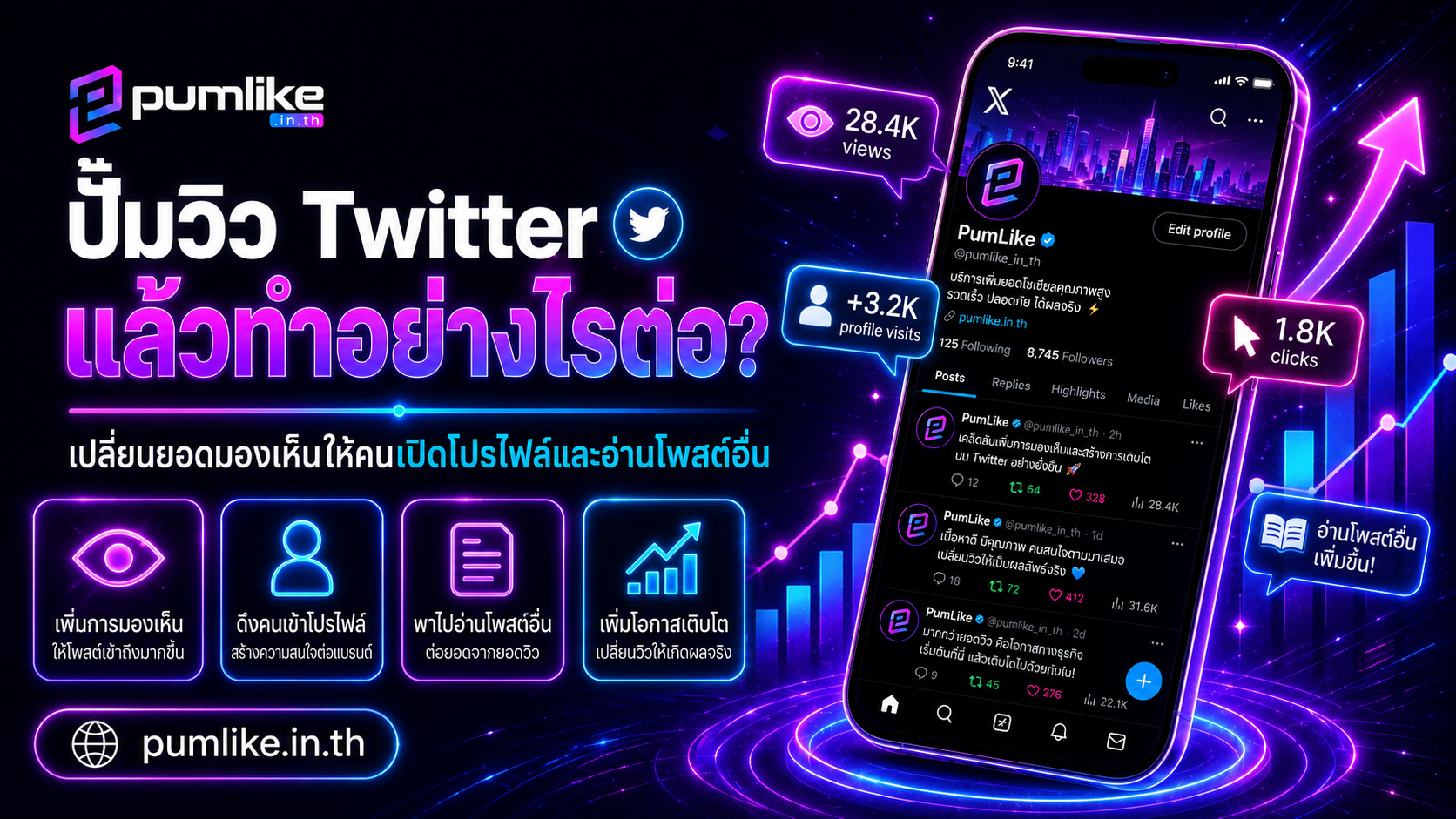
What Comes After a Twitter View Boost? Turn Visibility Into Profile Visits and More Post Reads
A higher view count can make a post more noticeable, but visibility alone does not guarantee that people will open the profile, explore older posts, or follow the account. What happens after a Twitter view boost depends on the complete path surrounding that post—from the opening message and profile image to the bio, pinned post, threads, and related content waiting on the account.
Think of a tweet as a sign outside a shop. More views can help more people notice the sign, but they will only step inside when the message matches their interests and the account gives them a clear reason to continue. A profile with an unclear identity, scattered topics, expired links, or no recent activity may lose attention even when one post receives many views.
The better objective is therefore not simply to increase Twitter views. It is to create a connected journey in which one visible post leads to a profile visit, a useful thread, a product page, a portfolio, or another relevant post. This approach turns a single number into information that can improve the entire content plan.
👀 Treat Views as an Entry Point, Not the Final Result
A view count indicates that a post has appeared on screen or received attention, but it does not show whether the message was understood. A tweet can have a high total without receiving meaningful replies, while a smaller post may generate profile visits, relevant questions, or new followers.
Before reviewing the next campaign, decide what action matters after the post is seen. A creator may want people to explore a portfolio. A store may need visitors to open a product page or send a message. An educational account may want readers to continue through a thread or save the information for later.
Once the intended action is defined, a Twitter view boost becomes one stage in a larger content path rather than an isolated number. It also becomes easier to judge whether the selected post is actually supporting the account’s purpose.
🧭 Give the Main Post One Clear Direction
Some tweets contain useful information but provide no reason to continue. Others ask the reader to follow, reply, open a link, read a thread, and send a message at the same time. Too many instructions can make the next step less obvious.
Choose one main action that matches the purpose of the post. A short educational tweet might direct readers to a detailed pinned thread. A featured design can invite visitors to open the profile and view the full collection. A product introduction may point to a single page containing price and ordering details.
The call to action should explain the benefit, not simply request attention. “See the full checklist in the pinned post” is more informative than “Please follow my account.” People are more likely to continue when they know what they will find.
🖼️ Make the Profile Image Easy to Recognize
On the timeline, profile images are displayed at a small size. Complex illustrations, tiny letters, and low-contrast colors can become difficult to recognize. When a viewer sees the account again, a clear visual identity helps connect the new post with the previous one.
Business accounts usually benefit from a simple logo with enough space around it. Creators and personal brands may use a clear portrait with good lighting and an uncluttered background. Keeping the same visual identity across related channels can also make the account easier to remember.
After increasing Twitter views, some users may decide whether to open the profile based only on the name, image, and first line of the post. A readable profile image therefore supports the transition from visibility to recognition.
✍️ Write a Bio That Explains the Account Quickly
When someone opens a profile, they usually scan the name, bio, link, and pinned post within a few seconds. A general statement such as “Sharing interesting things” does not explain why the account deserves continued attention.
A practical bio answers three questions: Who are you? What topics do you cover? What does a follower receive? For example, “Product photography and lighting tips for small online stores” creates a clearer expectation than simply writing “I enjoy photography.”
Contact details or links should also be current and easy to understand. Choose the most important destination rather than filling the profile with several unrelated paths. The goal is to reduce the number of decisions a new visitor must make.
📌 Turn the Pinned Post Into a Starting Page
The pinned post is one of the most valuable areas for people arriving from a promoted or highly visible tweet. An expired announcement, an old discount, or a broken link can stop the visitor’s journey immediately.
A store can use the pinned post to explain its main products, ordering process, delivery information, and contact channels. A creator may collect selected work and service details. An educational account can build an index of useful threads organized by topic.
The pinned post does not need to contain everything. It should provide a simple overview and direct visitors to the most useful next pages. Short sections, readable formatting, and working links make exploration easier.
🧵 Design Threads That Reward Continued Reading
Threads work well for tutorials, case studies, comparisons, personal experiences, and stories that require several stages. However, dividing a long paragraph into separate tweets does not automatically create a good thread.
The first post should clearly identify the problem and what the reader will gain. The following posts can expand one point at a time, while the final section should summarize the main lesson and suggest one related destination.
When the opening tweet receives additional views, inspect the whole thread before promotion. Make sure the sequence is complete, the images still load, and every referenced link works. Readers who enter through the first post expect a coherent continuation.
🔗 Connect New Posts With Existing Valuable Content
Accounts often publish useful posts that quickly become difficult to find. Connecting new material with older content gives each tweet a longer working life and encourages visitors to explore more than one idea.
A marketing account writing about headlines can link to an earlier audience-research thread. A store introducing a new product can direct people to an older tutorial that explains how to use it. A creator can connect a finished project with behind-the-scenes material.
This internal connection makes the account feel like an organized resource rather than a stream of unrelated updates. It also helps visitors understand the main themes without scrolling through every post.
🎯 Choose the Right Tweet Before Boosting Views
Not every post is equally suitable for a Twitter view boost. A strong candidate should make sense to someone who has never seen the account before. It should contain a clear point and lead naturally to a profile, thread, website, product, or pinned post.
Casual greetings, private jokes, or time-sensitive comments may depend too heavily on context. Account introductions, useful summaries, featured work, recurring questions, and evergreen advice are often easier for new viewers to understand.
Before selecting a post, ask two questions: Can a new visitor understand it without reading previous tweets? Is there a meaningful reason to explore further? When either answer is unclear, improve the post before increasing its visibility.
💬 Create Space for Genuine Replies
Twitter works best when communication does not remain one-directional. Relevant replies provide context, show that the account is active, and may help new visitors understand the subject more deeply.
End selected posts with a specific and easy question. “Which stage causes the biggest problem for you?” or “Which of these two methods are you currently using?” is easier to answer than a broad request such as “What do you think?”
When people respond, continue the conversation respectfully. There is no need to turn every reply into a sales message. Useful clarification and thoughtful responses often build more confidence than repeated promotion.
🗓️ Prepare Follow-Up Content Before the Main Campaign
A highly visible tweet can bring new visitors to the account, but interest may disappear when there is nothing recent to read. Before trying to increase Twitter views, prepare several follow-up posts that support the same topic from different angles.
- Educational post: Share a practical method, checklist, or short explanation.
- Discussion post: Invite readers to compare experiences.
- Portfolio post: Show recent products, services, or completed work.
- Summary post: Organize important ideas from previous threads.
- Related-content post: Guide visitors toward another useful topic.
A varied content mix prevents the profile from appearing like a continuous advertisement. It also gives different visitors more than one reason to remain interested.
📊 Measure Profile Visits and Continued Reading
After a Twitter view boost, do not evaluate success from the visible view count alone. Check whether more people opened the profile, explored the pinned post, continued through the thread, or visited a connected page.
A store can observe messages, product-page visits, and questions about ordering. Creators may watch for portfolio activity or collaboration inquiries. Educational accounts can review saves, relevant replies, and continued reading across connected posts.
When views increase but no other behavior changes, the main post may not contain a clear next step. Another possibility is that the profile does not explain the account’s value quickly enough. These areas should be reviewed before repeating the same campaign.
🧪 Test One Important Variable at a Time
Changing the headline, image, bio, pinned post, call to action, and posting time simultaneously makes it difficult to understand what improved the result. Use related topics and change one main element per test.
For example, compare two posts with similar information but different opening sentences. Another test may compare a text-only tweet with one supported by a clear image. The goal is not to make every post identical but to identify which structure encourages profile visits.
Record the results over several rounds. A post that produces more profile exploration with the same number of views provides a stronger model for future content than one that only displays a larger total.
🛍️ Guide Store Visitors Toward Complete Buying Information
A product tweet should offer more than a picture and product name. New visitors need benefits, price information, ordering steps, delivery conditions, and a reliable contact channel. When the details do not fit in one post, summarize the key points and connect to a dedicated page.
Increasing Twitter views for a sales post is more useful when the buying path is simple. The link should open correctly, the destination should match the advertised product, and messages should be monitored.
Stores with many products do not need to promote everything at once. Start with a featured product or a post that clearly introduces the brand, then observe which categories visitors continue to explore.
🎨 Help Visitors Find a Creator’s Best Work
Designers, photographers, writers, artists, and video creators may have many strong posts, but new visitors cannot appreciate them when the portfolio is difficult to navigate.
A pinned index or organized thread can group work by category. The post selected for additional Twitter views may feature a signature project, but it should also connect to related pieces, a process thread, or information about commissions.
A well-organized profile increases the chance that one visible post will lead to several more reads. It also makes professional inquiries easier because visitors can quickly understand the creator’s style and available services.
⚠️ What to Avoid After Views Increase
Avoid changing the account name, profile image, bio, and content direction all at once. Visitors who remember the original post may not recognize the updated profile. Visual improvements are useful, but important identity elements should remain consistent.
It is also unhelpful to boost every tweet before learning which posts generate profile visits. Testing one priority post at a time provides clearer information and reduces spending on content that has no meaningful continuation path.
Views should never be presented as proof of sales, endorsements, or popularity that cannot be verified. Review platform rules and service conditions, and keep promotional messages accurate so viewers are not misled.
🛠️ A Step-by-Step Plan After Increasing Twitter Views
First, confirm that the main tweet has one clear message and one next action. Second, update the profile image, bio, link, and pinned post so a new visitor understands the account quickly. Third, prepare at least two or three related posts to support continued reading.
During the campaign, observe views together with profile visits, thread activity, replies, link activity, and relevant inquiries. When a post successfully brings people to the profile, adapt its structure for other topics rather than copying the same wording.
When people see the tweet but do not open the profile, improve the opening and call to action. When they open the profile but do not follow or read more, review the bio and pinned post. When new followers arrive but do not return, strengthen the publishing rhythm and conversation.
✨ Final Takeaway: Give Every View a Path to More Content
A Twitter view boost can increase the first layer of visibility, but profile visits and continued reading depend on the account’s structure. Clear messaging, a recognizable image, an informative bio, and a useful pinned post help turn attention into exploration.
Choose a tweet that works without previous context, give it one purpose, and connect it to a relevant thread, product, portfolio, or resource. Evaluate what visitors do next instead of focusing only on the total view count.
Before placing an order through Pumlike.in.th, confirm the post link, service name, minimum quantity, and applicable conditions. One tweet may bring people to the entrance, but the quality and organization of the full profile determine whether they continue reading and return later.